We analyzed 350+ frontline onboarding programs. Here's the 8 things the best get right.

Most onboarding programs are built the same way: a welcome message, some company history, a list of rules, and a login for the systems people need. It feels complete. It usually isn't.
So we decided to look at what actually works, based on real programs instead of best guesses.
We reviewed 378 published onboarding courses from 25 organizations in retail, hospitality, logistics, and healthcare. That's over 8,200 individual screens: every piece of text, every image, every video, every PDF, and every quiz question.
All from companies whose new hires start on the shop floor, behind the front desk, or on a delivery route, not behind an office desk.
We looked at what these programs actually contained, not just what they claimed to cover:
- Which topics come back again and again, and which ones are missing
- How companies explain their culture, and whether it's abstract or concrete
- How they teach the real, day-to-day work
- How, or whether, they check that any of it actually landed
The pattern that emerged was clear. The best programs aren't just HR introductions. They combine four things:
- a strong sense of company and culture;
- practical operational knowledge;
- service and quality standards;
- and a way to check understanding.
Most programs get one or two of these right. Very few get all four.
Here's what we found, and what you can do with it.
1. Company story
The company story is in every program, but few make it feel real
Every organization in our dataset includes some version of "who we are": history, locations, products, what makes the brand recognizable. That part is easy. The harder part is making it stick.
The strongest programs didn't just describe the company. They made it concrete enough that a new hire could explain it to a customer by the end of their first week. They used real photos of the actual team and workplace, real locations, real products, and not generic stock imagery or vague mission statements.
A simple test: if a new employee can't repeat back what the company does and why it matters, the onboarding isn't finished yet, no matter how polished the welcome video looks.
2. Culture & values
Culture and values are everywhere, but the best programs show them instead of stating them
Mission, vision, and values show up in all 25 organizations. That part isn't the differentiator. What separates the strong programs is that they translate values into behavior, instead of leaving them as words on a slide.
Instead of writing "we value hospitality," the better programs show what that looks like during an actual shift:
- How to greet a guest
- How to handle a complaint
- What a great interaction sounds like, and what a poor one sounds like
Values are easy to write and easy to skip past. Behavior is what people actually remember and repeat.
3. Service standards
Service standards work best when they're built as real situations, not policy text
In hospitality, retail, and foodservice especially, service standards make up a large part of onboarding: greeting guests, handling complaints, tone of voice, service recovery, upsell moments.
The strongest examples don't just state the standard. They put the new hire into a situation, like a difficult customer, a complaint, or a handover between shifts, and ask what they'd do next.
This is one of the clearest patterns in the entire dataset: a short scenario followed by a quick question consistently teaches more than a page of policy text ever does.
4. Product knowledge
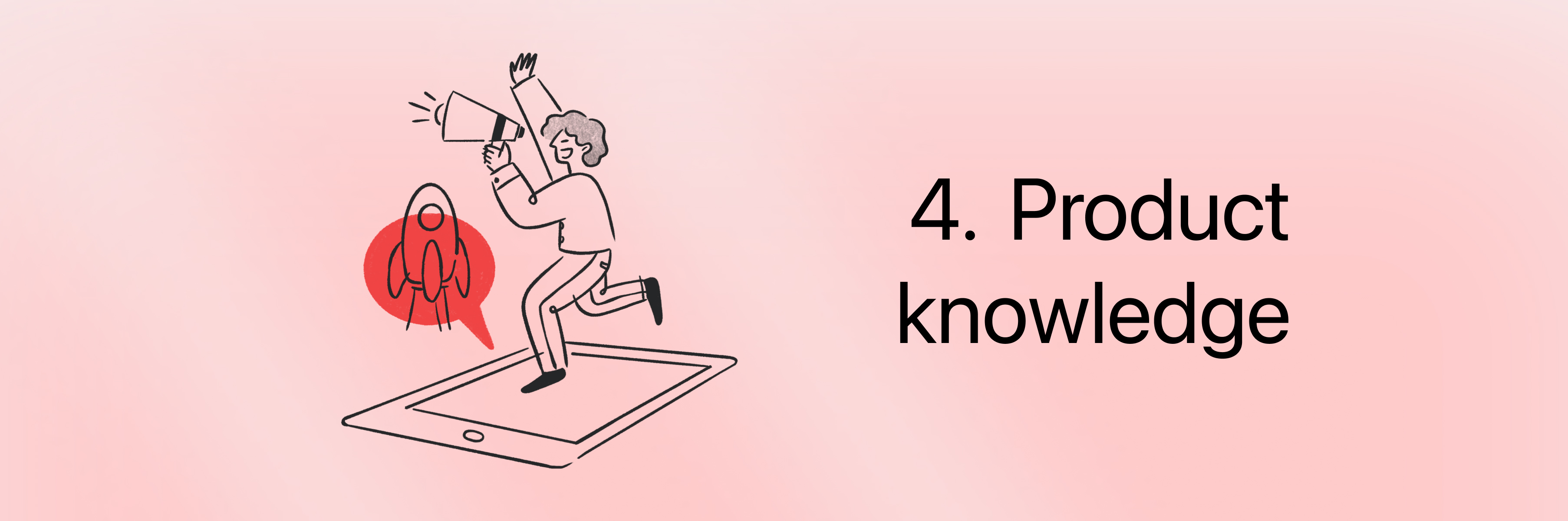
Product knowledge needs two layers: what's needed on day one, and what can wait
Nearly every organization teaches what they actually sell, serve, or operate: menus, rooms, treatments, warehouse processes, retail products, specialist procedures. How much of this content there is varies a lot by industry.
But the best programs all do one thing the same way: they separate what a new hire absolutely needs before their first shift from what they can pick up later.
Without that separation, product knowledge turns into one long information dump on day one, most of which won't be remembered anyway.
With it, new hires walk into their first shift knowing just enough to feel useful, and the rest gets layered in over the following weeks.
5. Who does what
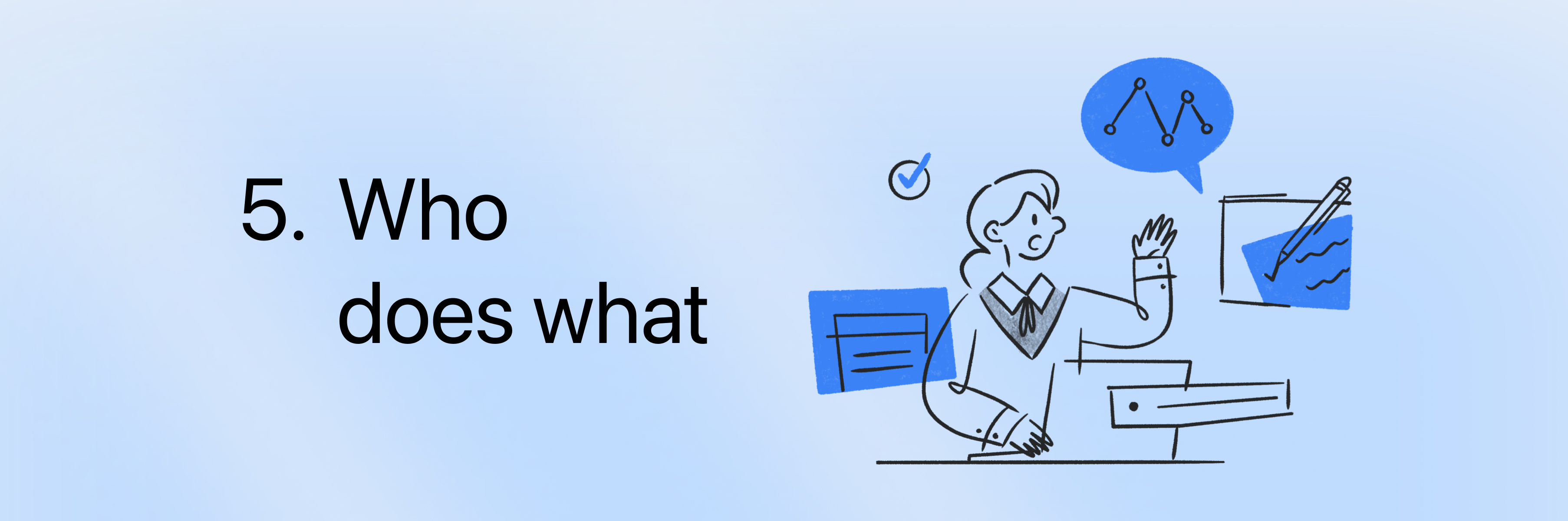
New hires need a simple map of who does what, especially across locations or departments
This is one of the more overlooked patterns we found. Many organizations mention departments and contacts somewhere in their onboarding, but the strongest programs give it its own early module: what each department is responsible for, who to go to for what, and how that might shift depending on location.
Without this, new hires spend their first few weeks guessing who to ask, or asking the wrong person and getting nowhere. A short, dedicated "who does what" module fixes this almost immediately.
6. Safety & compliance
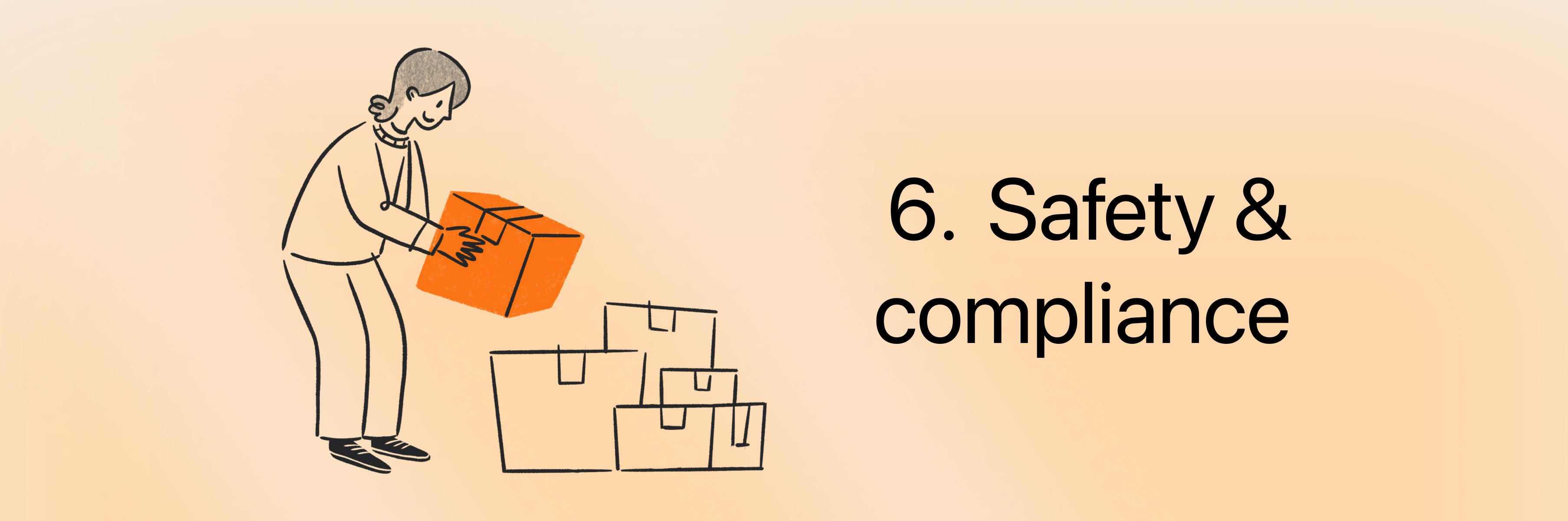
Safety and compliance information works best when it's short, easy to find, and kept separate
Safety and compliance topics show up in 22 of the 25 organizations: house rules, hygiene procedures, emergency steps, incident reporting, privacy, safe equipment use. This content is often required by law, genuinely important, and, if we're honest, easy to make boring.
The programs that handle it well treat it as something to look up, not something to read start to finish:
- Checklists instead of long paragraphs
- Real-life questions for safety decisions ("what would you do if...")
- Emergency information kept in its own easy-to-find module, separate from everything else
High-risk topics also get revisited over time in the strongest programs, instead of being covered once during onboarding and never mentioned again.
7. Tools & systems
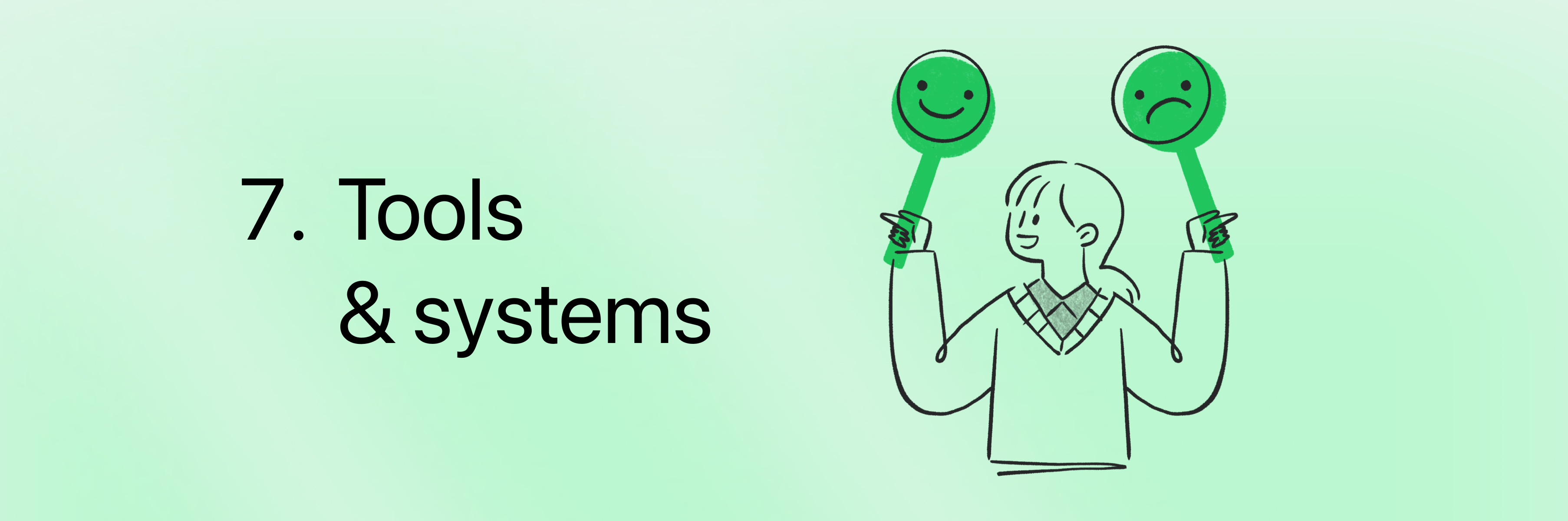
Tool and system training has become a standard part of onboarding, not a footnote
24 of the 25 organizations include a module on how to actually use their tools: where to find the schedule, how to submit a request, how internal communication works, how to use a platform like Oneteam. A few years ago, this might have been an afterthought. Today, it's close to universal.
The best versions of this content don't stop at explaining the tool. They set clear expectations too: what belongs in a chat message, what belongs in a form, and what's a conversation for a manager. That one distinction alone saves managers a lot of repeated, avoidable questions later on.
8. Quizzes & checks
Quizzes appear everywhere, but the strongest programs place them where mistakes actually matter
Every organization in the dataset uses some form of knowledge check: quizzes, scenario questions, or practical tests. That part is reassuring. What's less consistent is where these checks are placed. Too often they land on trivia or generic company facts, and skip the service, safety, and procedural knowledge that actually shapes day-to-day performance.
The strongest programs are deliberate about this. They place a quiz after a service standards module, after a safety procedure, after anything where getting it wrong on the job has real consequences. Used this way, a quiz isn't a box to tick. It's a genuine way to find out whether the content actually worked.
What the strongest programs share
Looking across all 25 organizations, the ones with the best onboarding aren't doing more than everyone else. They're doing the same handful of things more deliberately:
- They make the company and brand feel real, not abstract
- They turn values into visible behavior
- They layer knowledge instead of dumping it all at once
- They give new hires a clear map of who does what
- They keep safety and compliance short and easy to find
- They check whether any of it actually landed, at the moments that matter most


Dans cet article

Autres articles


.png)
Watch the full demo & start your free trial

.svg)
.svg)


(+31) 10 268 14 60
.svg)

.svg)
.svg)
