What is internal communication and why does it matter?

%20(2).png)
The definition of internal communication
Internal communication is the flow of information between people within the same organization. Often shortened to internal comms or IC, it includes communication between executives, managers, and frontline employees – in other words, everyone in the company regardless of their role, rank, or location.
It’s important not to define it too narrowly. Internal communication can be top-down announcements, two-way conversations, crisis updates, onboarding support, or even quick informal chats. It can happen face to face, over email, or via a digital platform. The key is to make it structured, intentional, and aligned with your company’s values. Without a clear plan, internal communication quickly becomes fragmented.

Why internal communication is so important
The purpose of internal communication goes far beyond sharing information. It shapes culture, builds engagement, and supports productivity. Here are some of the main reasons it matters:
Share your strategy
Research shows that 72% of employees don’t fully understand their company’s strategy. Strong internal comms can change that by breaking down the strategy into clear goals and showing how each team contributes.
Give employees a sense of purpose
When people understand how their role fits into the bigger picture, they feel more connected and motivated. Internal communication helps reinforce this sense of purpose.
Strengthen your company culture
Every message you share is an opportunity to reinforce values, tone, and culture. Over time, this consistency helps build the culture you want employees to live and breathe.
Boost engagement
Engagement doesn’t come from flooding people with information. It comes from creating dialogue. Polls, Q&A sessions, and interactive messages invite employees to join the conversation. Engaged employees are more productive, more loyal, and less likely to leave.
Collect feedback
Internal comms is also about listening. Surveys, polls, and discussion spaces help leaders understand what’s working and what needs improvement.
Enable collaboration
Breaking down silos is one of the biggest benefits of internal comms. The right tools connect departments, locations, and teams, helping employees collaborate across functions.
Crisis management
When a crisis hits, communication is your steering wheel. Clear, timely internal comms helps control the narrative, reduce confusion, and protect both your reputation and your bottom line.
Improve the employee experience
Put all these benefits together and the result is clear: good internal communication leads to a better overall employee experience – for both desk-based staff and frontline teams.
Put together, this adds up to an improved employee experience for all your workers, whether they’re on the frontline or desk-based.
Building an internal communication plan
If you want to move beyond ad-hoc communication, you need a clear plan. A strong internal communication plan helps you stay focused and turns employees into true brand ambassadors.
A solid plan should include:
- An analysis of your current communication strengths and weaknesses
- Clear objectives, supported by measurable KPIs
- A phased approach to roll out improvements
- Defined target audiences (by role, location, age, or length of service)
- Core messaging linked to your goals
- The right mix of internal comms tools
- A way to measure and evaluate progress
👉 Want a detailed breakdown? Read our guide: How to create an effective internal communication plan in 8 steps.
Internal communication tools you can use
There are many different tools that organizations rely on to keep employees informed and connected. Each option has its strengths and limitations. The right choice depends on your company size, workforce structure, and long-term goals. Let’s look at the most common tools in more detail:
Instant messaging apps
Tools like WhatsApp or Messenger are popular in industries such as retail and hospitality, mainly because they’re quick and easy to set up. Many frontline teams already use them informally to swap shifts or share updates.
However, there are drawbacks: personal numbers are shared without consent, messages easily get lost in endless group chats, and there is no way to manage or archive communication centrally. While useful in the short term, these tools are not designed for professional, large-scale communication.
Despite claims that email is “dying,” it remains a staple in most organizations. It works well for desk-based employees who check their inbox daily. For frontline teams, however, email is often ineffective. Many don’t have a work email address or access during their shifts, which means crucial information can be missed. On top of that, email overload is a real problem, making it difficult to separate urgent messages from background noise.
Social media platforms
Some companies use private Facebook groups or LinkedIn for networking and sharing information. Social platforms can foster a sense of community, but they blur the line between work and private life. Many employees prefer to keep these spaces personal, which makes social media less suitable as a primary internal communication tool.
Intranet
Traditional intranets were once the go-to solution for housing company news and resources. Today, many organizations are replacing them with modern, social intranets that allow commenting, liking, and sharing. While this offers more interaction, intranets often remain static and underused if they are not mobile-friendly or integrated with daily workflows.
Bulletin boards and posters
Physical bulletin boards in canteens or hallways still exist, especially in operational environments. They’re helpful for fixed reminders or compliance-related communication, but they can’t guarantee reach. Employees may miss updates if they’re not working in the same location every day.
Team meetings
Face-to-face meetings are still one of the most effective ways to engage employees. They allow managers to check in, share updates, and encourage discussion. However, meetings can be time-consuming, hard to scale, and depend heavily on managers to communicate consistently across teams and locations.
Internal communication platforms
Specialized comms platforms or apps are designed to centralize communication in one place. They usually provide features like timelines, news feeds, and group chats. While they solve many issues of scattered communication, they are often limited to messaging and do not cover the full employee experience. This means companies end up adding multiple point solutions for onboarding, training, or surveys, which can create a fragmented digital workplace.
Employee experience platforms
The most comprehensive option is an employee experience platform. These platforms bring communication together with other essential elements of the employee journey, such as onboarding, e-learning, surveys, forms, and checklists. Everything is accessible in one mobile-first app, which makes them especially effective for frontline employees who work without a desk or company email address.
The advantage here is not just convenience, but also consistency. Employees don’t have to juggle multiple apps or miss important updates. Managers have a single environment to reach, train, and engage their teams. And leadership gains insight into engagement, learning progress, and feedback across the entire workforce.
👉 In short: messaging apps, email, or bulletin boards may work in specific situations, but they all have clear limitations. If you want a long-term solution that connects all employees, supports company culture, and improves efficiency, an employee experience platform is often the most future-proof choice.
Content that makes internal comms engaging
The channel you use matters, but so does the content itself. The quickest way to lose your audience is by sending the same dull updates week after week. Instead, mix it up with content that employees want to read and interact with.
Here are some ideas:
- Share important business updates, especially those that directly affect frontline teams.
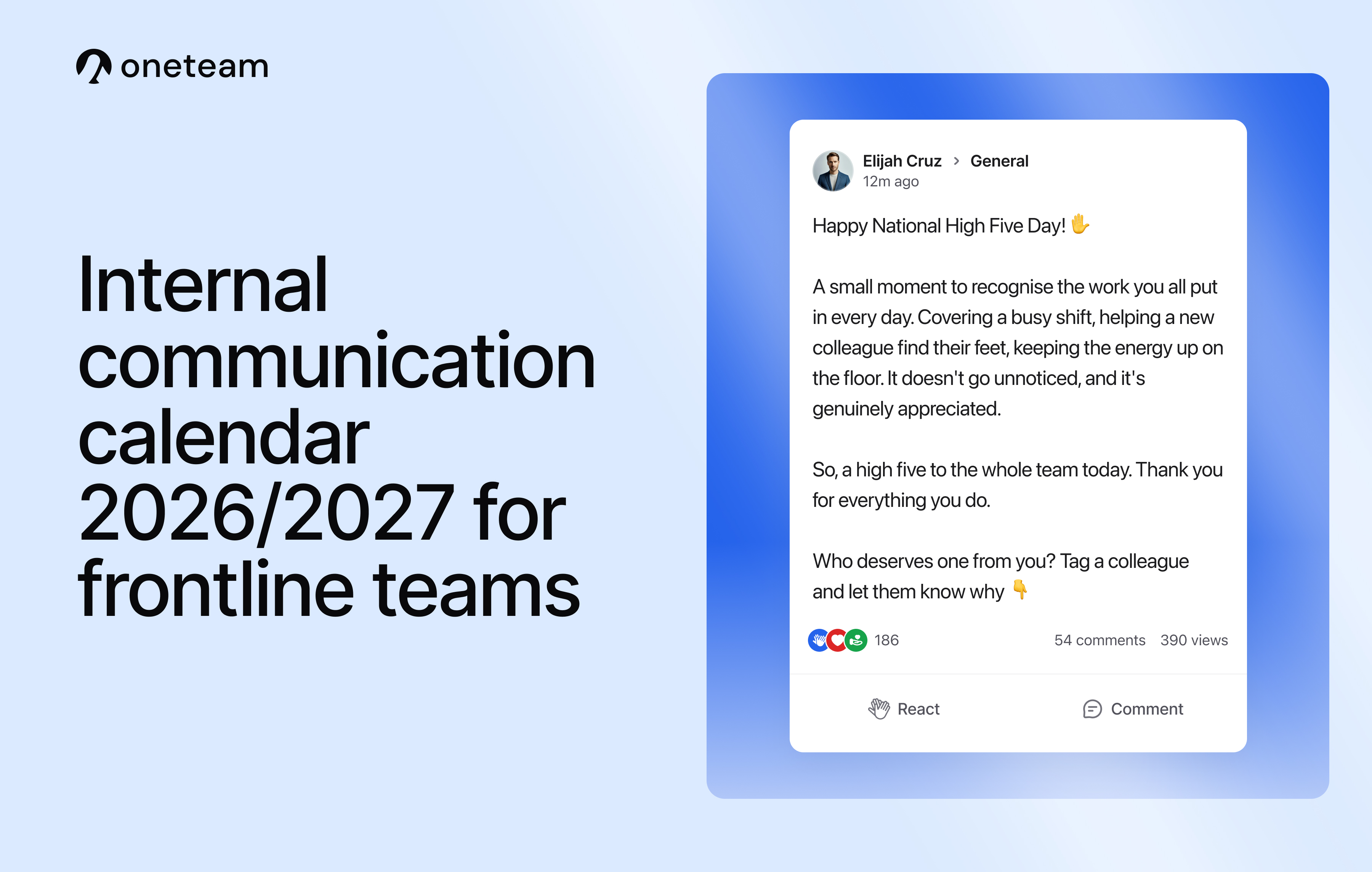
- Celebrate individuals and teams – 88% of employees say peer recognition motivates them.
- Share the bigger picture: values, priorities, and progress.
- Ask for employee testimonials, e.g. a selfie video about a new staff discount.
- Organize fun team challenges to build energy and connection.
- Add quizzes and games to make learning interactive.
- Encourage peer-to-peer learning and knowledge sharing.
- Collect feedback through surveys and show how it drives change.
Find more inspiration in the blog post: 8 content ideas to spice up your internal communication.

Finding the right solution for your employees
Internal communication has the power to reduce turnover, prevent miscommunication, and create a stronger culture. But the tool you choose makes a big difference.
Oneteam’s all-in-one employee app combines internal communication with everything else frontline employees need: onboarding, e-learning, surveys, forms, and checklists – all in one mobile-first platform.
This gives organizations a seamless way to connect, train, and engage employees while also improving efficiency and consistency.
👉 Interested in transforming your internal communication? Book a guided product demo and see how Oneteam can help.


In this article